

February 4, 2026
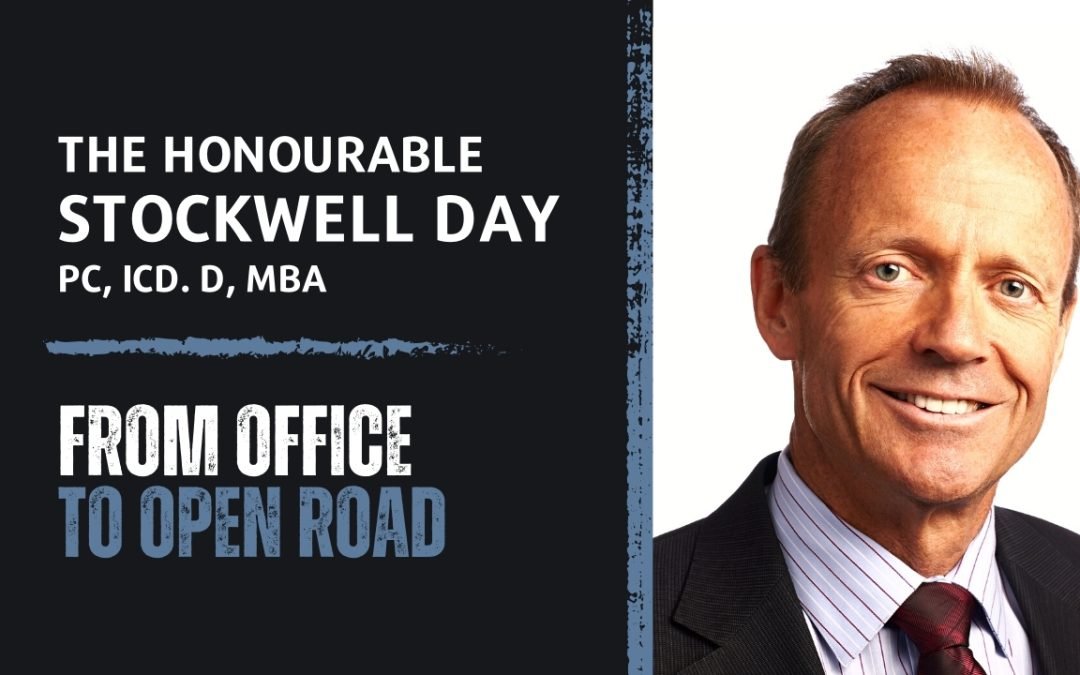
“From Office to Open Road” with the Honourable Stockwell Day PC
Politics is a chapter, not your whole story. We will discuss how speaking up on issues with courage and conviction while you are in “here”, prepares you to leave thankful and equipped for what is out “there.”
Join us for this presentation for members of Parliament by the Honourable Stockwell Day, followed by Q&A.
Timestamp
0:00 Introduction of the Honourable Stockwell Day – Ms. Darlene McLean
0:55 Presentation – Honourable Stockwell Day, PC, ICD. D, MBA
37:44 Thanks – MP Richard Bragdon
38:05 Q&A
38:08 How do we inspire the next generation of leaders?
38:53 How did you balance family relationships? What did you do to successfully maintain them?
41:48 Thoughts regarding compassion and integrity as a parliamentarian…
42:43 Thoughts on the sacrifice required as an elected member of Parliament…
43:21 Thoughts on navigation challenging relationships…
44:45 Thanks and closing remarks – MP Richard Bragdon

The Honourable Stockwell Day PC, ICD. D, MBA
The Honourable Stockwell Day was elected 9 times over 25 years at both the provincial and federal levels and in two separate provinces. He served the Province of Alberta as Minister of Finance, Minister of Social Services, Minister for Aboriginal Affairs, Minister of Labour and Deputy Premier.
Federally, Stockwell was elected Canada’s Leader of the Official Opposition in 2000 and subsequently served Canada in Government as Minister of Public Safety, Chair of the Cabinet Committee on Afghanistan, Minister of International Trade, Minister for the Asia Pacific, and President of the Treasury Board.
He operates a consulting business advising national and international clients and serves as past or present Chairman or Director on a variety of public and private boards.
He is an active conference speaker and commentator on national and international television and in social media. His feature documentary “Israel: Lessons Learned From October 7” is viewed on a number of media platforms.
Stockwell is a marathon runner and ocean kayaker. He and his wife Valorie enjoy being taught cyber skills by their 14 grandchildren. Read more.
Transcript From Office to Open Road – Honourable Stockwell Day
Thanks so much for what each of you is doing. I know what it’s like. I feel your pain.
And if you don’t mind, I’m going to start today with a land acknowledgement–maybe a little different than you’re used to. I’d like to offer a different kind of acknowledgement, but important.
A Different Kind of Land Acknowledgment
We’re gathered on land that is precious and meaningful to many people. I want to recognize with respect and humility and acknowledge something even more foundational: that this land–like every land–ultimately belongs to the Lord. He made it, and as the Scriptures say, “The earth is the Lord’s and everything in it.” Psalm 24:1
In Genesis we’re reminded creation is not accidental; it’s a good gift. “And God saw that all He had made, and it was very good.” Genesis 1:31
Psalm 115 teaches us that the heavens belong to the Lord, and the earth is entrusted to us as humans, calling us to stewardship and responsibility.
And since God is Creator, every person we meet has dignity and worth. And because God made us, that happens to be true and happens to be the case: we’re made in His image.
So today, on God’s sovereign ground, we honour one another, we listen well, we speak truthfully and we seek the good.
So I’d just like to acknowledge that.
The Next Life After This
Getting right into it, because your time is valuable. I appreciate that, so I’m going to be conscious of the time.
People do ask me, because I’ve been asked to sort of give some thought to–not just while we’re here, but the next life after this–and there is one after this, I can assure you. And I say that knowing that just because you’re here, doesn’t mean you’re planning your exit. But if I can add some things that you may find helpful–and a lot of the stuff you’re going to know already in terms of transition–then I would feel my time is well spent.
People say, “Well, you know, what’s the first thing you noticed when you left office? What was the first difference?” And you know, previously being in Cabinet, I can easily say the first thing I noticed after leaving government was when I hopped into the back seat of my car, it didn’t go anywhere. It just stayed there.
One of my sons told me, “Well Dad, you got a lot of stuff you’re gonna have to get used to now. For instance, you’re gonna have to start carrying your own bags.”
Which actually I did anyway. And he explained it to me. He said, “On suitcases now there’s these little wheels, so you can just pull it behind you when you’re going through the airports.”
I mean there are some big differences. Some of you here may leave this good office of your own accord. You may be exited for other reasons.
Oftentimes I find in talking with others, you leave here with a resume, but not necessarily a roadmap. And sometimes people are kind of caught off guard by that.
So if I can go through a list of things that were helpful to me, some that I found out the hard way, some are just, you know, sheer practical day to day stuff–I’m sure you would have thought of a lot of these things.
Regardless of what you feel in your own heart and what your family or spouses may think–your time here may be interrupted. And it may be interrupted sooner than you thought.
But definitely you have to keep in mind–regardless of what you feel in your own heart and what your family or spouses may think–your time here may be interrupted. And it may be interrupted sooner than you thought.
And so, as they would say, I don’t want to sound like the person who’s the undertaker, but have your affairs in order–especially your financial affairs. Sometimes we can get in here and think, “Oh good. I got elected and I got a good percentage. And you know what? Probably going to be elected the next time and so we can sometimes misjudge our own finances. So be careful of that.
I’m going to add this too for those who may be watching also, check out exactly what is available to you when you leave. And don’t be afraid to ask the finance people, what is your pension going to look like? I know none of you are here for the pension. Make sure you understand. Because the media makes a thing…you know, you hear all kinds of words added about MP’s pensions. Just make sure you understand it may not be quite as large as you thought. So check that out.
Budget carefully and in your budget when you leave–you may be aware of this–you will be given a fund. It’s not a lot of money, but there’s some money there to help you pursue something else. To give you some time to do that. Keep that in mind.
One thing that I did–and I was very happy that I did–was […] the ICD. D program. It’s the Institute of Corporate Directors. It’s offered through Rotman Business School of Management at the U of T. It does cost something. It’s really worth it. And more and more boards today are looking to see if you’ve got those. And it’s nice, […] it’s a vigorous course, but it’s manageable on time, and you can add those letters at the end of your name that are helpful. So boards really do look at that.
If I can just give a thought on this too. And again, all my advice […] I call velcro advice: throw it at the wall. If it sticks, fine; if it doesn’t, then let it fall off.
In joining boards, you may want to think about–and it depends on how badly they want you–you may want to think about the role of senior advisor, or advisor in a company, and maybe not necessarily a board director. There’s pluses and negatives. Do make sure that […] any board you’re joining, make sure they have a board of directors’ insurance. At any time a board can be sued. And just keep that in mind. And if you’re on a board as a senior advisor, you’re not as susceptible to litigation. So it’s just some practical stuff that you might want to keep in mind.
The people who wind up really getting devastated when they lose, are those who figure this is the whole book of your life, and it’s not.
This part of our lives here, it’s a chapter. It’s not your whole book. And when you’re done here, it’s another chapter in your book. The people who wind up really getting devastated when they lose, are those who figure this is the whole book of your life, and it’s not.
And you would know people–and some of you, by the way, have run and you’ve come back, amazingly–and I don’t mean amazingly because of you. But many people, when they leave here, are […] devastated. And they take it very personally. Because they served well. They served with tremendous vigor. Then all of a sudden it seems like maybe their constituents don’t want them back, and some people take that really personally.
So you can find some solace if you read in the book of Samuel: 1 Samuel 8:7. Samuel, of course, was rejected by the people. He was doing a great job as leader and as High Priest, and they said, “We don’t want you. We want a king instead. We just don’t want you anymore.”
And he was devastated, and he actually went to God, “They don’t want me.”
God comforted him. God basically said, “Don’t take it personally.”
There’s other issues out there, so keep that in mind.
Appearance is so important–unfortunately so–in this particular business. [As a] matter of fact, when I survey the breadth of professions and occupations that people can be involved in, [I] don’t know of many more where there’s more focus on appearance and on the superficial.
Because it’s the nature of the beast: people are watching all the time and we have to market ourselves. Sometimes nobody else will talk about us.
So our egos–regardless of how humble we are–get caught up; our identity gets caught up. This place becomes our identity, which can be devastating when that gets taken away. And we put so much on–and this is natural, I mean, for me, for anybody–on how we’re seen and where we’re seen.
I can remember when I was the Chief Government Whip in the Alberta Legislature, some of the stuff was revealing to me. One person came into the office one time and said, “So and so, the other MLA is getting preferential treatment, and I’m not.”
I said, “Oh, how’s that?”
He said, “Well, I walked by their office and their desk is bigger than mine.”
And I went, “How do you know that?”
He said, “I measured it.”
This is true. Now none of you suffer from this. But it’s so easy to get caught up in, because how we’re perceived is going to give us a sense of what our chances of getting reelected. Are we perceived with honour? Are we perceived that we’ve achieved? This type of thing.
I can remember the Premier of the day […] he gave me a task. He said, “You’re gonna have to go and meet with one of your colleagues, and he’s about to get some news he’s not going to be happy with.”
And I said, “What’s that?”
And he told me who the colleague was, and he said, “He’s not going to be back in Cabinet.”
And I kind of went, “Was that a big deal?”
And he said, “Well, a couple days ago, sitting here in my office, I told another one of our colleagues that, and he passed out. He fainted right where he sat at the thought that the Cabinet position was going to be taken away.”
[…] This job is so immersed in how we look. And you know, there’s that Scripture that says, when you go into the banquet, don’t rush to the head table; wait to be called up. It’s a lot better to be called up, than to be sitting there and have someone come along and say, “Oh, sorry that seat’s taken. You got to go sit back there.”
“You work at The Keg, don’t you?”
There’s actually a Proverb that talks about that. And look, I know the pain. If you go to an event–a constituency event–and […] maybe you want everybody to know you’re there. And whoever’s at the mic, they don’t even introduce you. They don’t even say you’re there. And you kind of feel like you’re maybe the most important person there, and you didn’t get acknowledged.
But little things help along the way. I was doing an event. I was going to be–you know, had a significant role in this one particular event: big city, and I had my tux on, everything. I was going up the elevator. There’s a woman in the elevator. She was looking at me. […] she wasn’t going to the event, but she said, “I know you. I know you.”
And I go, “Yeah, you know, I guess you know me.”
And she says, “You work at The Keg, don’t you?”
You know, at first I was so devastated. [It] took me weeks to recover, and all I could think of was saying, “I like the Keg. I do like The Keg.”
“He who created you, formed you. And I’ve called you by name.”
It used to happen too. If people don’t recognize you. This happened, like three weeks ago. I’m in a big office building in Calgary, and I was going down the escalator with one of my sons, who works in that building. And I was talking about the fact that around Calgary everybody just used to know me and recognize me all the time. Now…not so much.
And my son kind of needled me. He said, “Yeah, because I know there would be times where people would get you and Preston Manning mixed up.”
Listen, I don’t mind being mixed up with Preston Manning–great guy. I downplayed that. I said, “Well, the odd time that used to happen, but no, no […] that’s not an issue.”
No exaggeration: coming up the elevator was a guy–I didn’t know who he was. As we passed like this, he looked over and he said, “Hi, Preston.”
The timing–you know, God is good about keeping us in check.
But when people forget you–and look, they will. Some will remember you forever, and some will forget. Isaiah must have known what that’s about, because in chapter 43 verse 1, he says, “He who created you, formed you. And I’ve called you by name.”
So as we heard this morning, He’s got your name; He’s got your back. And keep that in mind in the moments where you might feel forgotten.
How do we act and what do we do? What kind of things do we say or do that could determine our future?
And so while we’re still here, […] then how do we act and what do we do? What kind of things do we say or do that could determine our future? Maybe even in terms of who’s going to work with us, who would want to work with us.
I was raised in the Anglican Church. They had a great prayer that they would say, I think every Sunday morning. And it would talk about asking forgiveness for the things we’ve said that we shouldn’t have said. I got a list of those. And also for not saying the things we should have said. […] And forgive us for the things we’ve done we shouldn’t have done. I’ve got a list of those.
I was going to tell you how I’m the perfect guy, but since this is being recorded, my wife might see it. I don’t want to have to do a retraction. But, yeah, we do things; I do things. I’ve done things I wish I hadn’t done.
And then the prayer goes on and it says, “…And for the things that we should have done, that we didn’t do.” So there’s always going to be those. And when those happen, it’s a prayer of asking God to perfect us, understanding what forgiveness is all about, and learning from them. So don’t be devastated. Pick up and keep going and continue to commit your ways to Him.
“Speak up for those who can’t speak for themselves.”
Probably the biggest commitment we have is actually not our Cabinet commitments. It’s not to our office here. But when we get elected, Proverbs, 31:8-9, says, “Speak up for those who can’t speak for themselves.”
There’s thousands of people in your constituency. You’re here because they do trust you to do that. And that means in Caucus, you may have to raise some issues from time to time that people don’t want to hear. And we don’t even have to agree with our constituents, but when something is on our constituents’ heart and mind, to make that known. They want to know that they’re being heard and that we’re to speak for them.
We often self-sensor. We have human fear. Might be issues that–is the leader going to like this issue? Is the minister going to like it? Is this going to hurt my chance for another appointment?
But our first commitment, other [than] to God, if we have faith in God, and to our family–it’s to those other people. It’s not to what we used to say–and I heard someone say this last night–There are no people more disliked than those in the PMO, working around the Prime Minister. The most feared people are those in the OLO. You know this. And by the way, that’s not true. They’re great people.
But when you hear this–little tip here–if someone says, you know the PMO…when we win the next election…or the OLO is concerned about this, or says this…If you have any doubt that it’s coming from the Leader, check with the Leader.
The Leader is busy–we know that. But I happen to know this Leader. I’ll take all the responsibility and blame. I brought him to Ottawa. I hired him. He’s one of my first hires; a great guy. And I’m still supporting him 100%. I’m out there on the trail. But sometimes the Leader isn’t fully aware of what you may have been informed of in the OLO. And the people there, they’re well-intended.
Nobody is going to remember the meeting you missed, but your kid might never forget the meeting that you missed with them.
Remember too–it’s so easy to forget–your families; they live in their own world. They live in a universe that, in many ways, is more important than ours. And we can tend to forget that.
I just saw a thing on the news. It was kind of funny–regardless of whatever anybody’s position is relative to the president of the United States. But he was saying–sort of in an off moment–he had given this great speech. And then he called his wife and said, “What did you think?”
And she said, “About what?”
“That speech I just gave to the world.”
“Well, sorry, I was busy. I was having coffee with somebody.”
Our families are in different universes. And they don’t see ours as necessarily more important than [theirs].
Something else: this was pointed out by other political observers that Trump said, “I made a comment about Putin and about how well we were getting along. And when I went home, my wife said to me, ‘Are you aware that almost every time you say publicly how well you’re getting along with Putin, he launches more missiles into Ukraine?’ She said, ‘Are you aware of that?’”
And I use that as an example: listen to our spouses. Listen to them. They see the world from a different angle, and maybe the angle that we need to see.
Schedules are really important to our families. I’ve been a Whip, so I know what that’s all about. But some things–Meetings are important and you have obligations that you signed up for. I get that.
I’ll never forget a night here. One of our colleagues was looking kind of down. I said, “How’s it going? What’s going on?”
She says, “Well it’s my daughter’s grad tonight.”
And I went, “Like, grade 12 grad?”
“Yes.”
And I said, “Well, why aren’t you there?”
“Well, I’m on Duty.”
You know folks, there’s some things you got to talk to the Whip about, or whoever is arranging the seats? Or there are ways–as you know–you can get people to sit in for you. Now you can’t do that every time, but big stuff like that? Nobody is going to remember the meeting you missed, but your kid might never forget the meeting that you missed with them. So there’s some things that are unavoidable, but really keep that in mind.
Val agreed to something with me that, if it was super important, if it was falling on our anniversary, she was going to give me a little grace–a little. And this one time I said, “Honey, I got this meeting…of course it’s so important…”
I’ll tell you how important it was: today, I forgot what meeting it was. But I did go. But I said to her, “Look, you pick what you want to do and we’ll just do it on another night.”
She said, “Okay, that’s great.”
And when I got home, she said, “I’ve picked what we’re going to do.”
It’s great; she likes Van Morrison. She said, “We’re going to a Van Morrison concert.”
I said, “Wow! Van Morrison’s coming to Kelowna?”
She said, “No, he’s coming to Los Angeles.”
So, you know, they will keep these things in mind.
There’s always a battle on.
And folks, there’s always a battle on. There’s a battle on again, if you’re people of faith. There’s a battle for the souls of people.
There’s always a battle in our relationships. And it’s so easy here. This is the place of warfare. The Bible even says that: spiritual warfare. When you go to war with people here, you get close to them. There’s a natural bond. It’s like when we listen to veterans–God bless them–and they’ve been off on the front lines with people. Those are bonds that are strong. And just be careful on the emotional side. Because you go into the fight. You come out of the fight. Maybe you win, maybe lose. Your most important bonds are at home. So I just encourage you to really keep that in mind.
In terms of, why do people hate us? Polls are done, as you know, about politicians and where they stack up in terms of social acceptability. And just to remind you–in case you forget–on a list of 20 occupations, we’re down there around 19 or 20, you know, […] between car thieves and purse snatchers somewhere.
But the encouraging part about this: in the very same polls, when they ask people, […] “What about your politician?”
Actually the polls show that in most cases, you actually rank fairly high. Because you’re closer to them. And they’ll say, “What do you think about your MP?”
They go, “Oh no, actually, she’s pretty good…” or “No, actually, he’s pretty good.”
Cultural Marxism
So you’re familiar with the phrase Cultural Marxism? If not, if I can just remind us. Karl Marx, of course, being one of a number of thought leaders in this wrong direction in the late 1800s, espoused certain things that were very important to him. And in fact, that every communist nation was founded on and pursued. And unfortunately, now much of what we do is pursued as a culture.
Politics is downstream of culture, right? So this is what we’re dealing with. So when you say, “Well the media…they’re always against us and this and that…”
You cannot tolerate the thought, discussion, or the promotion of God.
So just think of some of the things Marx said. Number one thing: he said, there can be no God. You cannot tolerate the thought, discussion, or the promotion of God. That is number one. Very interesting to see in the December Finance Committee, a move to revoke status for organizations that promote God, really. That was number one.
The family is a human made construct and it needs to be corrected.
Number two is: the family is a human made construct and it needs to be corrected. It’s a construct to control people. That’s Karl Marx. He said, “You know, if you don’t need family, what’s the big focus on homes; the big pursuit of private property?”
That was actually the undermining effect of what’s the big need for private property? If you don’t need your own home—[if you] don’t have to work towards that, then why should you be deciding whether you should be an entrepreneur, or an innovator, or what you’re going to do? Government will decide the type of work that’s going to be most beneficial to society.
We’re going to have to turn things upside down and there will be those who oppose us.
And he said, “We’re going to have to turn things upside down and there will be those who oppose us.”
He said that. People who oppose; they have to be eliminated, not negotiated with. They have to be eliminated. […] You’re all historians–that was very publicly done and Stalin followed it, Lenin followed it. Almost every communist nation has followed that.
You go into the Public Square and anybody who’s opposing, you literally eliminate them–murder them, very openly, very clearly, so everybody can see. And in any city or any area, you only have to shoot two or three people; everybody falls into line.
And then, of course, he said, “And really, the masses? They don’t really understand. They don’t really get it. So there should be a few really smart, elite people that kind of run the show, with some technocrats.”
That is communist philosophy and unfortunately that flowed into the educational institutions, all the cultural high places–we’ve basically lost that ground.
The Virtue of Terror and Cancel Culture
So Marx is dead and gone. And there [were] other people who promoted this. But much of it continues. Even the violence that is required to change–those of you who studied the French Revolution, Robespierre…To think that someone could get away with beheading–literally beheading–maybe 30,000 people and killing many more. And he wrote about it. He talked about the virtue of terror. The virtue of terror.
So when people are out there on the streets and they’re violently protesting, they’re culturally Marxist. And in their own minds, they think this is the right thing to do. It’s a virtue to use terror.
That cultural Marxist thought is this: the state is everything. The state is everything. And if you oppose it, you’re actually hurting the state. And many of the people in mainstream media have gone to those schools. They went to those schools for four years.
We’re told in Scripture that the students become like the teachers. You actually become like your teacher and you come out embracing these things. So you come out as they have, and […] unfortunately, our post secondary institutions are steeped in this now.
God is not relevant. [As a] matter of fact, [if] you raise that issue, you should probably be eliminated. They’re not going to shoot you, but you can be canceled.
Family? That construct needs to be changed.
Private enterprise and the pursuit of business? That’s harmful.
Anybody who opposes these? You need to be canceled.
That’s where cancel culture comes from. […] So when you’re mad at the media next time, at something they said or twisted… […] I’m sorry this sounds like a conservative harping about the media–but it’s genuine. Most people who are doing the stories and doing the coverage, in their heart and soul, they actually feel that small “c” conservative policies are harmful to society. They actually believe that. So keep that mind. Don’t take it personally when they’re out to destroy you.
We all have lines in the sand. Stick with them and be honest about them.
There are certain things that if we speak up on them, we can win the vote. There are a few of those, and we need to be listening. We need to be aware of them. My father told me once, the first time I got elected, he said, “Do you know what the definition of instant is?”
I said, “What’s the definition of instant, Dad?”
He said, “It’s the time it takes–a person who’s just elected–It’s the time it takes them to go from speaking for their constituents, to speaking for their government and their party.”
He said it’s a very rapid transformation. Now look, when we sign on, we buy into certain things. People have said to me, how could you stay on in government? [It} must have gone against your conscience so much. I said, “No, I signed on to a system in which I said, as long as I can have my say–I know I’m not always going to get my way–but as long as I can articulate it, be clear and make my point…that’s kind of what I bought into.”
There are things that in my view […]–down through the ages in government…For me, on the financial side, raising taxes was simply off the charts. Now maybe, a war–and remember the first Wartime Measures Act when they brought in the income tax? It was for the wars: 1915. It was going to be 1%. And when you check out the debates in the House of Commons, there were people who opposed it then. And one person is on record saying, “1%? You let in taxes at 1%–mark my words–the day is going to come where they’re going to tax us 3%!”
And they laughed him out of the place. “No politician is ever going to be brave enough to bring in 3% tax!”
So speak up on those things.
Some things, for me, were non-negotiable in terms of topics. For you, they may be different. […] But just using it as an example, on the reconstruction of what’s going on in the whole area of gender. I told my constituents that I would always speak on that. Pierre has talked about parental rights.
Danielle Smith, I think, has it closest. She’s shown you can get elected on the fact that you say adults have the right to do whatever they like in this regard. And we respect that right. But kids need to be protected from pharmaceutical or surgical alteration. And it’s okay to have that view; you will not get dis-elected on that view.
So the reason I say that is there are people coming to me, and they come to you in British Columbia right now, who are running for leadership of the Conservative Party. We need to win that election. It’s another generation of socialism if we don’t.
And I’m saying as two just really basic items, if you can’t speak up on that one, that you are against the raising of taxes other than in dire emergency, and if you can’t speak up on the fact that girls should be protected and kids should be protected, then I’ll check out the other candidates. Those will not hurt you.
Whether you agree with those or not, I just use those as examples. We all have lines in the sand. If you’ve thought those through–and for people of faith, prayed those through–stick with them, and you can be honest in caucus about them. You can.
People have said to me, […] what are the things you want to remember when you’re out of here and you’re 10 years later, you’re 15 years later? There are the things that you accomplished. And you’ll know things you’ve accomplished that maybe some people will never know. But you know you’ve done them. And you’ve been responsible. And they’ve been good things.
I like the fact that the Premier of the day in Alberta allowed me to bring in Canada’s first, and maybe ever, single rate tax or flat tax. You know, I felt good about that.
I like the fact that the Prime Minister allowed me to be the first Minister of Security in Canada’s history to allow our border officers to have firearms. Can you believe it? I mean, you would know that. Our kids wouldn’t know. I tell Americans we went for so long, no firearms for our border. They go, what?
And now I see the Minister of Defense and the Prime Minister saying, definitely, we never want to let our Coast Guard have firearms. We’re protecting our shores from all kinds of threats.
What are the things you remember? What are the things that impact?
But the things that really matter? One of the things that I always remember was a trip I took with the Christian Embassy. It was 1993. I was Minister of Labour. I was asked to go and to speak in this; the Soviet Union was falling apart. These were exciting times, exciting days. […] And the people were asking us to present in the City Council in Kyiv, in the City Council in St Petersburg, at the Ministry of War in Russia, in Moscow. And they were open to us: “Yes, show us. Tell us how democracy works and yes, tell us how faith can be integrated.”
I’ll never forget being in St. Petersburg and a city councilor there sharing in tears–and here we’re in this beautiful building that had been built a couple centuries ago–when we started talking about items of faith,” he said, “the last person I knew who had a Bible was my grandmother. And she would hide it under the carpet, depending on who was coming into the house. And after she died, we never saw the Bible again.”
And folks, these things happen. These things can evolve; that you get to that particular place. I remember […] we’d given a presentation at the Rotary Club and at the Chamber of Commerce in the city of Kyiv, and […] for anybody who wanted to find out more about faith, to meet back there later that night–this was at lunch. And we would share very specifically about matters of faith.
“You know we’re supposed to be great people of faith–why don’t we just pray?”
We then went to the apartment building of our interpreter. And he took us up there. We spent some time up there in the afternoon with his wife and family. Poor. Right? Folks, I mean, keep up the fight against Socialism, because it makes people poor. His wife–bless her heart–she fed us a cucumber salad.
And anyway, we were going down in the elevator heading to City Hall to meet with the people there who wanted to hear more about faith. And the elevator ground to a stop. It is one of these old buildings. And the lights go out–boom. And there was myself, another elected person, someone from the Christian Embassy, and the interpreter—who I don’t think was a person of faith. So we stayed there in the darkness for a couple minutes and I said, “We’re ringing the bell?”
Nothing. He said, “That won’t help.” He said, “They take a long time to come, the mechanical people.”
I said, “Well, how long?”
He said, “Well, last time this happened, it was two years.”
I said, “We don’t have two years.”
And you know, one of the people said, “You know we’re supposed to be great people of faith–why don’t we just pray?”
And I felt a little foolish, but we prayed that God would somehow release that elevator. And when the person said, “amen,” down we went.
By the time we got to the bottom floor, the interpreter still had his mouth wide open; like he’d never quite seen anything like that.
We got to that meeting, and a number of those city councilors actually–we shared with them for a while–they made a profession of faith, which changed their lives.
So when people say, what are the things you remember? What are the things that impact? Yeah, those things really impact.
“If all the grief was worth that, was that worth it?”
I just close with this thought. My wife and I were walking down the street. […] I’d been Leader, and then wasn’t Leader. The media have–let’s say they take fun in laughing at people about their faith. We’re supposed to be respectful of everybody else, but that doesn’t necessarily apply to the media.
I remember on the campaign trail–of course, there were media in our chartered jet–one of the engines blew out, literally as we were landing. And a few people started praying. Everybody was terrified of that. After that, the media called our airplane “Prayer Force One.”
So sometimes it was nice, and other times you will either be attacked or ignored by the media because of what you believe. You need to recognize that. They won’t say that’s what it is. But again, it’s this culturally Marxist impulse they have, that if you or your government gets elected, it’s actually gonna be harmful to society. It’s a terrible thing. And so then you wonder about all the grief you get in the media sometimes, and it […] can drive you to distraction, and it’s not something you can always defend yourself against.
I remember walking onto a plane […] in Toronto. And there was a headline about something I’d said. This was one of the things I had actually not said. And it was a terrible headline, […] and everything on the front page of the Globe and Mail. And as I’m walking down the aisle of the plane, everybody’s reading the Globe and Mail–it was free on the plane in those days; you didn’t have to subscribe.
And I wanted […] actually to get the microphone from the flight attendant and say, “I have an announcement for you. That headline you’re reading is not true.”
You know, but people will be reading and then they look up at you, and then they sort of quickly look down. It’s an awful feeling; it is not fun.
What gets us through those times? Val and I were walking down the street in a city in Nova Scotia. A taxi pulls up, a guy jumps out, runs up to me and he says, “Are you Stockwell Day?”
“Yes.”
He said, “I want to tell you something.” He said, “Recently my life has been going so bad. I just wanted to commit suicide; I was at the end. And then this thought came to me.” He said, “I know where the thought came from. It was: ‘Stockwell Day had all kinds of things going wrong, and if he can keep going on, then so can I.’”
And he said, “Thank you.”
We shook hands, he jumped in the cab, and he was gone. And Val and I kind of looked at each other, and we sort of said, “If all the grief was worth that, was that worth it?” And we kind of said, “Yeah, it probably was.”
You know, those are things I want to share with you. Those are things I want to leave with you.
Concluding Thoughts
I’ve been asked if I would close in prayer, and then we’re going to have a time when people can ask questions; agree with me, or rebuke me, whatever you like. And I’ll pray, and then I’ll ask for you to join in prayer in a minute.
Father, I want to thank you for each person here today–each man and woman–for the work of their hands. Lord, Your Word tells us that the hand of the diligent is blessed and that diligence is honored by You. So help them to work, as they already are, with integrity, with wisdom and perseverance, and remember that their labor might not be seen by others, but it’s seen by You.
Lord, as each one here looks to the future, let Your steady hand be on them. You’re the one who goes before us. You promise that You’ll never leave us, or forsake us. Lord, we thank You for that.
Lord, even–I don’t know what’s on everybody’s heart and mind here, or those who might be watching or listening–but where there’s uncertainty, Lord, give clarity.
Thank You that Your word says we can ask for wisdom, and You’ll give it liberally.
Lord, those who are under pressure, give them peace, knowing they can have peace with You.
Where there’s fatigue–possible fatigue, even around this table–renew their strength.
And Lord, teach each […] of us to look ahead without fear, because You’ve not given us a spirit of fear, but of power, love and a sound mind. And help each one, Lord, to be strong, courageous and confident, remembering that we’re not alone. We’re in Your presence. Your guidance is available to us.
We think of their families, their decisions, their steps–establish the work of their hands. Let their lives bear good fruit for others, because Lord, that’s the desire of their heart.
And Lord, now I thank You that, with boldness but with confidence, I can speak that blessing over them that has been spoken over Your servants for hundreds of years: “The Lord bless you and keep you. The Lord, make His face shine upon you and be gracious to you. The Lord, lift up His countenance upon you and give you peace.”
And I’ll just close as we just continue in prayer for a moment, if it’s okay. There may be some here around this table […] or who are looking at this–and I respect everybody’s faith and everybody’s choices–but if you feel in your heart that you’d like to really put your faith and trust in Jesus Christ, you can pray that just in the quietness of your own heart and your mind. […] And so for those who feel led to quietly in your own heart and mind, pray along with me,
Heavenly Father, I come to You in Jesus’ name. I believe You are real. I ask You to come into my life by Your Holy Spirit.
Forgive the things I’ve done that I shouldn’t have done. Forgive the times I should have done things and I didn’t do them. Forgive the words I’ve said that I shouldn’t have said. Forgive the times where I should have said words and I didn’t say them.
I thank You based on Your own Word–the most trusted Word in the universe–that now that I’ve asked You, You have come into my life by Your Spirit. Help me to walk with You daily. In Jesus name, amen.
Q&A
How do we inspire the next generation of leaders?
First of all, remember whenever a political convention is covered, someone in the media always says–regardless, “It’s just older people here.” or, “Look at all the gray hair.”
They didn’t say that about this last one. They remarked on how many young people–I’m telling you, young people respond to the truth. As you know, the small “c” conservative principles that we’ve talked about, that’s what’s grabbing Gen Z, and whatever the next gen is. That’s what’s grabbing them.
So just keep speaking the truth. I don’t want to sound overly simplistic, but keep talking about those things, and the response will be there. They’re coming to us in bigger numbers than the other parties.
How did you balance family relationships and what did you do to successfully maintain them?
Mainly listen to my wife. I tell people, anything I did that worked, it’s because of the grace of God, or the grace of Val. Anything I did that didn’t work or flopped, was my choice; my bad decision.
Listen to your kids, you know, in terms of the time.
And by the way–I’m gonna say something here–I’m not suggesting anybody do this. All I’m saying is I did this, and Val and I agreed on this. This was in provincial politics. We didn’t actually [do] politics on Sundays. […] The media went berserk on that. They went berserk. […] “Well what if there’s a war and you’re Prime Minister?”
Okay. You know, it gets a little crazy. And actually, there’s even a suggestion that if we do these things–I don’t want to sound overly simplistic–but God will make up for it. So whether it’s making a decision you’re not going to do things on Sundays, or there’s certain things that are just sacrosanct–you’re going to stick with. […]
And by the way, if I have something in there where I’ve agreed with one of my kids, they got an event, a game or something, and I’ve said I’m going to be there, I check no conflicts going to be there. And then later, my staff comes to me and says, “Oh, you can’t do that. You’ve got this.”
I said, “No. No, no, I’ve got a commitment to my son. I made a commitment to my wife, I will be at that.”
So that actually will cover a multitude of times when you’re not.
But when they see that you’ve got that kind of time…By all means, be asking them, […] when you’re with them, […] share some things with them. […] For those of you of faith, that you’d like prayer; that you’d like them to be praying for. If you’re not a person of faith, ask them–well, as I’ve said in caucus, […] sometimes the Prime Minister asked me to speak on something and I said, “This is a big issue. If you’re a person of faith, you need to pray about this. If you’re not a person of faith, you should pray about it anyway.”
So definitely make them be included. I’ll never forget my son getting this commitment from me to be back in town at a certain time that day–it was for six o’clock, because he was involved in the football game. “Yeah.” I said, “I’ll be there, no problem.”
And I had a request. They said, “Oh, you know, you can’t go. You got a thing, and so you’re going to be an hour late.”
I said, “No. No, no, I made a commitment–a family commitment. I’m sticking with that. Because if the mayor had asked me to be there prior to that, I wouldn’t cancel the mayor. I wouldn’t cancel the king or the queen.”
And my son even called me as I was driving down the highway. He said, “Dad, you’re going to be here six?”
I said, “Yeah, I’m going to be there.”
Got there just in time. Well, he’d been picked to do the kickoff for the first game of the season. […] He was really excited about that. He didn’t want to wreck the surprise. And I thought, “Wow, if I’d gone to the meeting–I can’t even remember what it was–I would have missed that moment, you know?”
So there’s going to be times; but as far as you can, prepare the ground for that and be there for them.
Thoughts regarding compassion and integrity as a parliamentarian…
In terms of compassion, that’s why I shared about cultural Marxism. Most of the people who go after us, they just don’t understand. And God wants us–that’s why He says, you gotta love them. So that doesn’t mean you back off from firmly debating on a principle. But I tried, by the grace of God–but I can tell you who else–to be measured in the House of Commons. Sometimes I mean, you’ve got to hit hard, especially on these areas of principle. But I kind of lost it one day, and I got back to the office. Sure enough, there was a phone call from my mother, and she said, “Why were you rude to that nice man?”
And I said, “Mom, honestly, I wasn’t being rude. And by the way, he’s not a nice man!”
But people do watch.
Thoughts on the sacrifice required as a member of Parliament…
I’ve said it too. Yes, this is a sacrificial role. And yet I’m constantly reminded of my then constituents. You know, how many of them, […] six o’clock every morning facing financial hardships, family hardships, and their feet hit the cold floor, and they pull on their shoes or their boots, and they head off to work?So we do make sacrifices here, and it’s very helpful to remember that so do they, you know. Every single day; stuff we don’t even know about.
Thoughts on navigating challenging relationships…
[I] can’t always say I navigated it well. Sometimes you get angry. Sometimes you can even get bitter. You can feel sorry.
And so it helps–I don’t want to elevate this too high, but it does help–that at the Last Supper, Christ could lean over and tell Judas–and then later, kiss him–and say, “You know, you got to do what you got to do.”
He wasn’t happy about that. So that’s an example. Or Peter, who said, “Hey, I’m with you.”
I’m with you in this election. We’re going door knocking. I’m gonna stick with you and then they bail on you. And Peter bailed, because he was afraid of what a waitress was going to say? You know, I’m not demeaning waitresses, I’m just saying he bailed on Jesus–even swearing–because that person didn’t […] agree with the path. So you’re going to have people who are going to do that.
What was Jesus’ response? He says, “Peter, the enemy wants to sift you like wheat, but I’ve prayed for you.”
So pray for those, even who despitefully use you and persecute you and say all manner of evil against you for My sake. You know, I don’t want to oversimplify it, but take it to the Lord and just say, “Lord, You know what this is like. Everybody bailed on You and You didn’t even do anything wrong.”
Remember that person in prayer.
The opinions expressed by the speakers and commentators at our events and posted on our website are their own and do not necessarily reflect the opinions of the Christian Embassy.